🚨 BREAKING NEWS 🚨
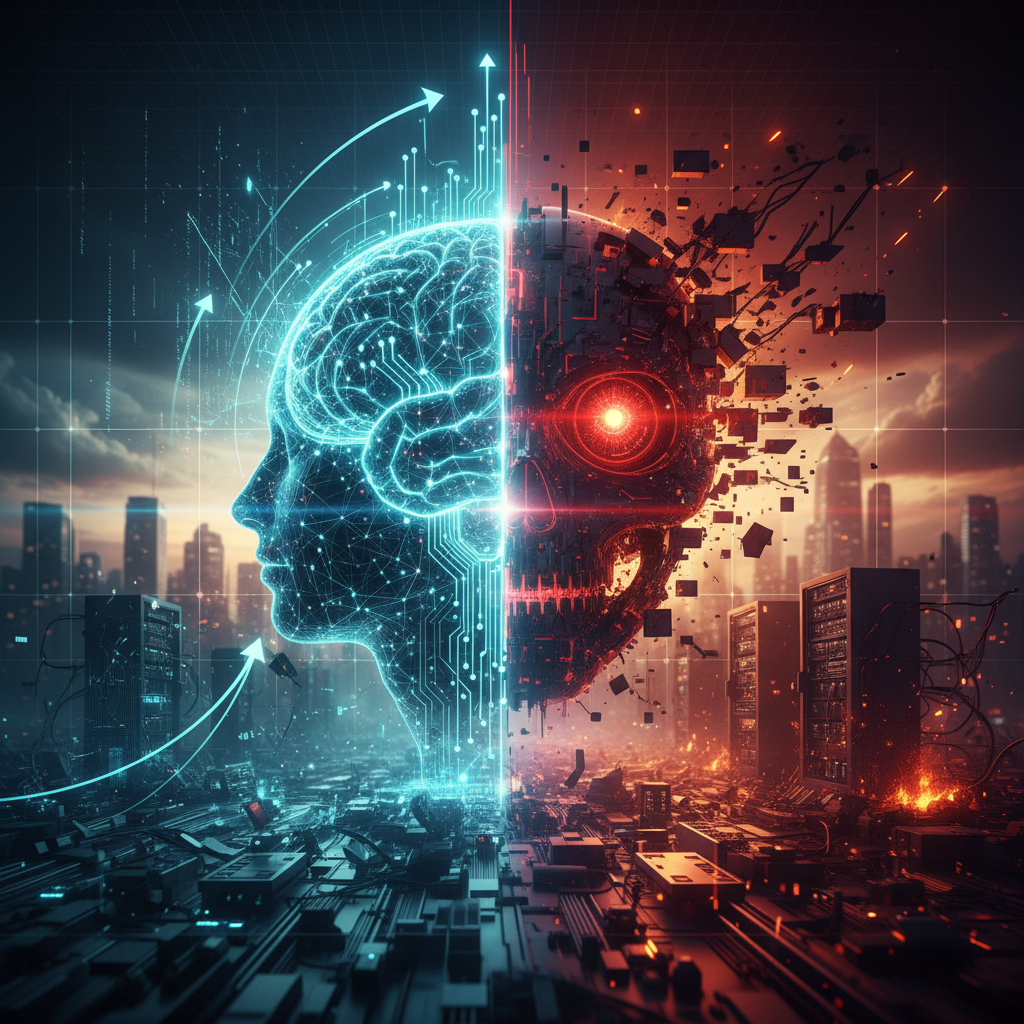
In an era defined by rapid technological advancement, few phenomena command as much attention and apprehension as artificial intelligence. What was once the domain of science fiction is now an everyday reality, with AI systems permeating nearly every aspect of modern life. Recent months have witnessed an unprecedented acceleration in AI capabilities, driven by breakthroughs that are not merely incremental but truly transformative, promising to reshape industries, economies, and the very fabric of society. Yet, alongside this boundless potential, a complex web of ethical, economic, and social challenges has emerged, demanding urgent and thoughtful deliberation.
The Dawn of Generative AI and Specialized Applications
The most striking advancements have undoubtedly come from the realm of generative AI. Large Language Models (LLMs) like OpenAI’s GPT series, Google’s Gemini, and Anthropic’s Claude have moved beyond simple task execution to sophisticated content creation. These models can now generate human-quality text, craft intricate code, compose music, and even design visual art with astonishing fidelity. This capability has profound implications for fields ranging from marketing and media to software development and education, streamlining processes and unlocking new forms of creative expression.
Beyond generative models, specialized AI applications are also reaching new heights. In healthcare, AI is revolutionizing drug discovery, accelerating diagnostics, and personalizing treatment plans. Material science benefits from AI’s ability to predict properties of novel compounds, while climate science leverages AI for more accurate forecasting and complex data analysis. Robotics, powered by advanced AI, is becoming more agile and adaptable, moving beyond factory floors into logistics, elder care, and hazardous environment exploration.
Economic Shifts: Job Markets and New Industries
The economic ramifications of this AI surge are already being felt globally. Automation, now supercharged by AI, is poised to displace jobs, particularly in routine cognitive tasks. Industries like customer service, data entry, content moderation, and even certain aspects of legal and financial analysis are facing significant restructuring. However, technological revolutions also create new opportunities. The demand for AI engineers, data scientists, ethicists, and prompt engineers is skyrocketing. Furthermore, entirely new industries built around AI services and AI governance are emerging, promising to generate wealth and employment in unforeseen ways.
Economists are grappling with how to manage this transition. "We are at an inflection point," says Dr. Elena Petrova, a leading economist specializing in technological disruption. "The key will be proactive reskilling and upskilling initiatives, coupled with robust social safety nets, to ensure that the benefits of AI are broadly shared." The challenge lies in preparing workforces for jobs that may not yet exist, requiring a fundamental shift in educational paradigms and lifelong learning.
Navigating the Ethical Minefield
With great power comes great responsibility, and AI’s rapid evolution has intensified scrutiny over its ethical dimensions. Concerns about algorithmic bias are paramount; if AI models are trained on biased data, they will perpetuate and even amplify those biases in critical areas such as hiring, lending, and criminal justice. Privacy is another major concern, as AI systems often require vast amounts of personal data, raising questions about data security, consent, and surveillance.
The proliferation of sophisticated deepfakes and AI-generated misinformation poses a direct threat to democratic processes and public trust. The ability to create convincing but entirely fabricated media could destabilize societies and erode the very concept of objective truth. Furthermore, the question of control – who designs, owns, and regulates increasingly autonomous AI systems – remains contentious, sparking debates about accountability and unintended consequences.
Societal Transformation: A Double-Edged Sword
Beyond economics and ethics, AI is fundamentally altering how we interact with the world. In education, personalized learning paths powered by AI could revolutionize pedagogy, adapting to individual student needs and making knowledge more accessible. In healthcare, AI promises breakthroughs in personalized medicine and disease prevention. For individuals with disabilities, AI-powered assistive technologies offer unprecedented levels of independence and inclusion.
However, the societal impact also carries risks. Over-reliance on AI could diminish critical thinking skills. The potential for increased surveillance and data collection by both state and corporate actors could erode civil liberties. The digital divide could widen, exacerbating existing inequalities if access to AI’s benefits is not equitable. The fundamental question of what it means to be human in an increasingly intelligent machine world is no longer purely philosophical but imminently practical.
The Imperative for Global Governance and Responsible Innovation
Recognizing the profound implications, governments and international bodies are scrambling to develop regulatory frameworks. Calls for a "responsible AI" approach are growing louder, advocating for transparency, accountability, fairness, and safety in AI development and deployment. The European Union’s AI Act, a landmark piece of legislation, aims to regulate AI based on its risk level, setting a precedent for global AI governance.
However, the global nature of AI development necessitates international cooperation. "No single nation can effectively regulate AI in isolation," states Dr. Kenji Tanaka, a UN advisor on technology policy. "We need shared principles, interoperable standards, and collaborative research into AI safety and ethics to navigate this uncharted territory successfully." The challenge is to foster innovation while simultaneously mitigating risks, striking a delicate balance between progress and precaution.
Looking Ahead: Shaping Our AI Future
The AI revolution is not merely a technological shift; it is a societal inflection point. The latest breakthroughs offer tantalizing glimpses of a future where complex problems are solved, creativity is amplified, and human potential is expanded. Yet, this future is not predetermined. It is being shaped by the choices made today – by researchers, policymakers, corporations, and citizens alike. The imperative is clear: to steer AI development with foresight, ethics, and a commitment to human well-being, ensuring that this powerful technology serves humanity’s best interests and leads to a more equitable and prosperous world for all.
📱 Stay Updated! Follow us for the latest breaking news and exclusive stories.