🚨 BREAKING NEWS 🚨
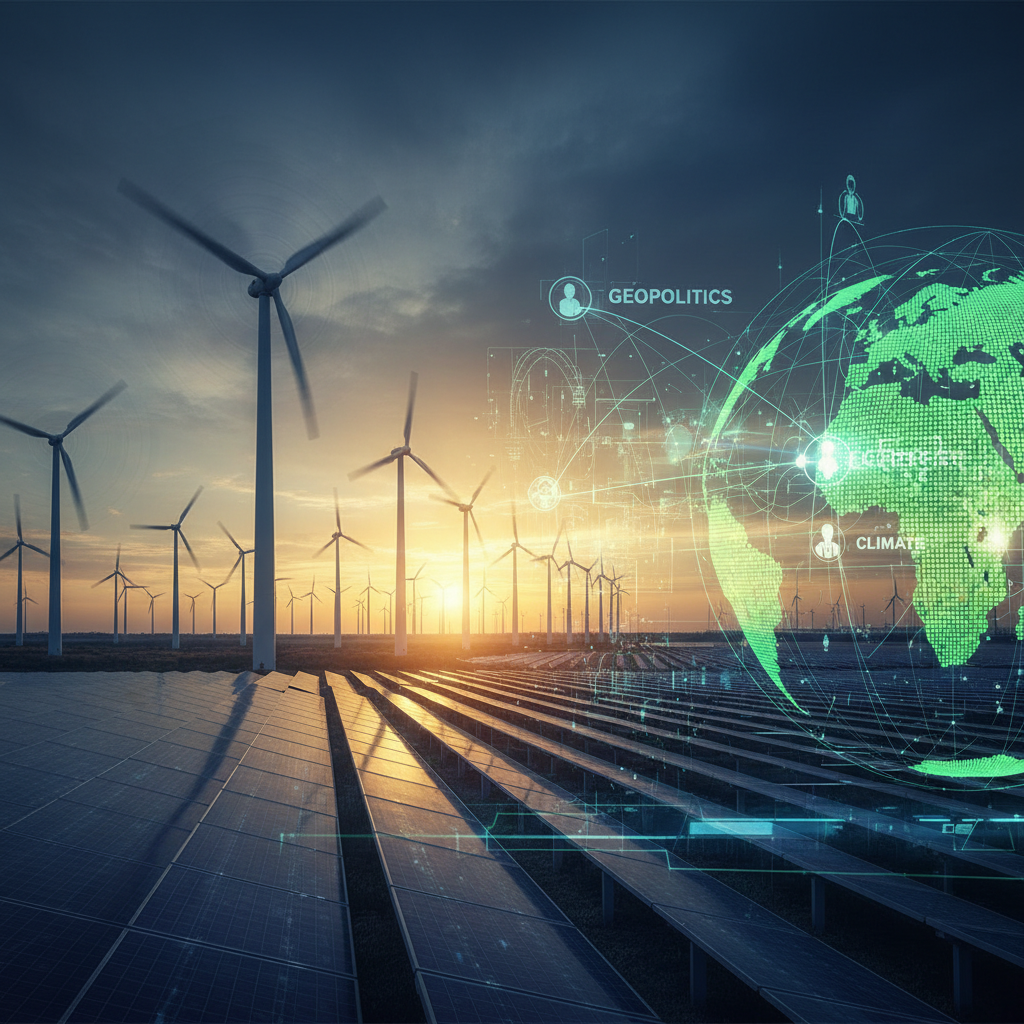
The global energy landscape is undergoing a profound and irreversible transformation, as nations worldwide accelerate their pivot towards renewable sources. Driven by the escalating urgency of the climate crisis, coupled with volatile geopolitical dynamics and a quest for greater energy security, investments in solar, wind, and other clean technologies are reaching unprecedented levels, fundamentally reshaping economies and societies.
Recent years have illuminated the dual imperative for this shift. On one hand, the scientific consensus on climate change, reinforced by a barrage of extreme weather events – from devastating heatwaves and wildfires to catastrophic floods and prolonged droughts across continents – underscores the critical need to drastically cut greenhouse gas emissions. The Intergovernmental Panel on Climate Change (IPCC) has repeatedly warned that limiting global warming to 1.5°C above pre-industrial levels requires rapid, deep, and sustained reductions in emissions, with a significant role for renewables.
On the other hand, geopolitical instability, most notably the war in Ukraine, has exposed the vulnerabilities inherent in a global energy system heavily reliant on fossil fuels. Europe, in particular, faced an acute energy crisis as it scrambled to reduce its dependence on Russian gas, prompting a dramatic acceleration of renewable energy deployment and energy efficiency measures. This crisis served as a stark reminder that energy independence is inextricably linked to energy security, and that diversifying away from imported fossil fuels is not just an environmental imperative but a strategic one.
Record Investments and Rapid Technological Advancement
The response to these pressures has been swift and substantial. According to the International Energy Agency (IEA), global investment in clean energy technologies is projected to reach $1.7 trillion in 2023, with solar PV alone accounting for more than all other power generation sources combined. This surge in capital is fueling a virtuous cycle of innovation and economies of scale, driving down the costs of renewable energy to levels that are now competitive, and often cheaper, than new fossil fuel power plants in many regions.
Solar photovoltaic (PV) technology stands out as a prime example. Its cost has plummeted by over 90% in the last decade, making it the most affordable electricity source in history. Similarly, wind power, both onshore and offshore, continues to grow in capacity and efficiency, with new turbine designs pushing boundaries in power generation. Advances in battery storage technology are crucial, mitigating the intermittency of solar and wind by enabling grid-scale storage and enhancing system reliability. Emerging technologies like green hydrogen, produced via electrolysis powered by renewables, are also gaining traction as a potential decarbonization solution for hard-to-abate sectors like heavy industry and long-haul transport.
Policy Drivers and Regional Leadership
Governments worldwide are implementing ambitious policies to accelerate the transition. The U.S. Inflation Reduction Act (IRA), passed in 2022, represents a landmark investment of nearly $370 billion in climate and clean energy initiatives, offering significant tax credits and incentives for domestic manufacturing and deployment of renewables. This has sparked a wave of investment in new factories and projects across the United States.
In Europe, the REPowerEU plan aims to rapidly reduce dependence on Russian fossil fuels by boosting renewable energy capacity, diversifying supplies, and increasing energy efficiency. Member states are setting ambitious targets and streamlining permitting processes to fast-track projects. China, already a dominant force in renewable energy manufacturing and deployment, continues to make massive investments in solar, wind, and nuclear power, aiming to achieve carbon neutrality before 2060. India, too, is rapidly expanding its renewable energy capacity, targeting 500 GW of non-fossil fuel electricity by 2030.
Challenges and the Path Forward
Despite the undeniable momentum, the renewable energy transition is not without its challenges. Modernizing and expanding grid infrastructure to handle the influx of decentralized and intermittent renewable power is a monumental task, requiring significant investment and smart grid technologies. Supply chain vulnerabilities, particularly for critical minerals like lithium, cobalt, and rare earths, pose geopolitical and environmental concerns that need careful management.
Land use for large-scale solar farms and wind parks, community acceptance, and the need for a just transition for workers in fossil fuel industries are also critical considerations. Ensuring that the benefits of clean energy are equitably distributed and that no communities are left behind is paramount for the long-term success and social license of the transition.
According to Dr. Elena Petrova, a Senior Energy Analyst at the International Renewable Energy Agency (IRENA),
📱 Stay Updated! Follow us for the latest breaking news and exclusive stories.