🚨 BREAKING NEWS 🚨
A New Dawn for Space Exploration
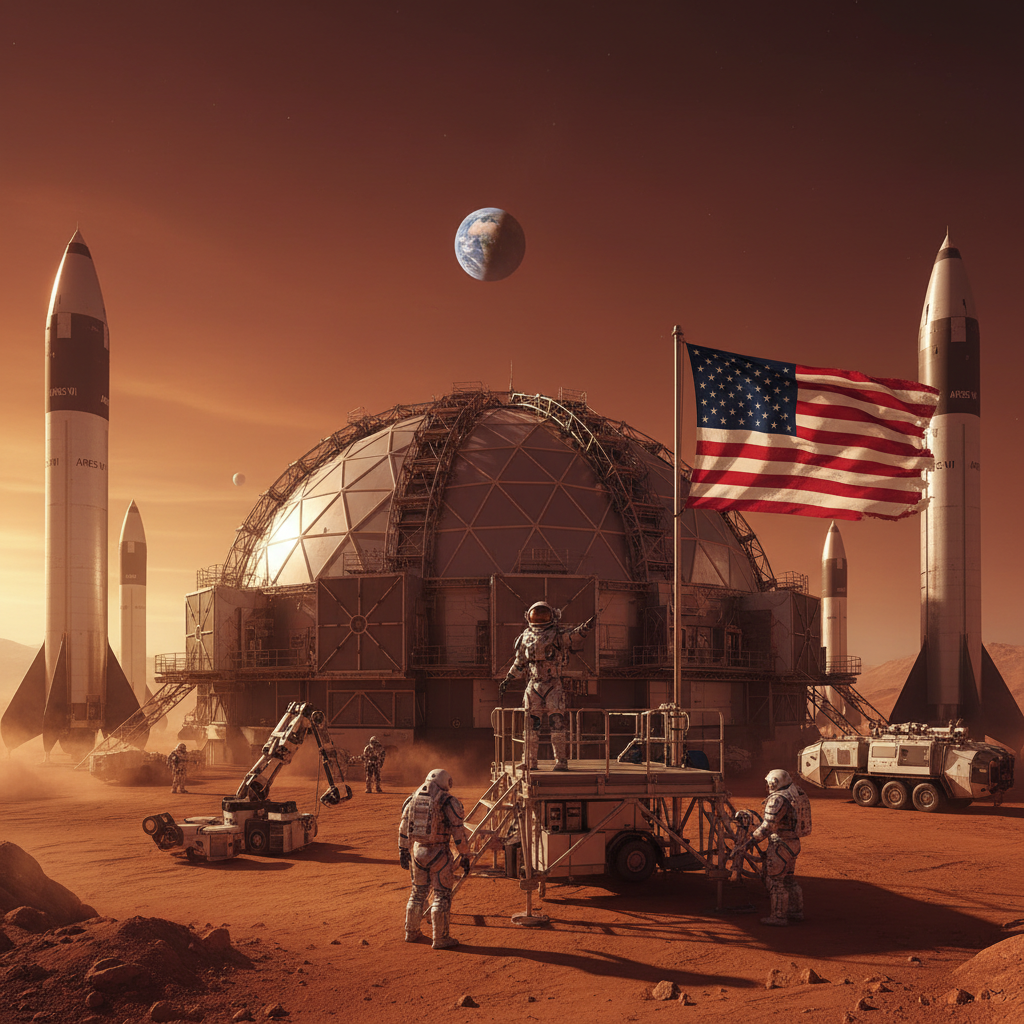
In a moment that will undoubtedly redefine humanity’s place in the cosmos, NASA today announced the resounding success of its groundbreaking Ares VI mission to Mars. After years of meticulous planning, a nail-biting descent, and months of relentless exploration, the advanced ‘Vanguard’ rover has not only fulfilled its primary objectives but has far surpassed them, delivering an unprecedented trove of data that includes compelling evidence of ancient microbial life and significant implications for future human exploration.
The announcement, made during a highly anticipated press conference at NASA Headquarters in Washington D.C., was met with palpable excitement from scientists, engineers, and space enthusiasts worldwide. NASA Administrator Dr. Patricia Vance, her voice thick with emotion, declared the mission an unequivocal triumph. “Today, Mars is not just a planet in the sky; it is a testament to what we can achieve when we push the boundaries of human ingenuity and curiosity,” Dr. Vance stated, to a standing ovation. “The Ares VI mission and its incredible Vanguard rover have opened a new chapter in our understanding of life beyond Earth and our own cosmic origins.”
Vanguard’s Breakthrough Discoveries on the Red Planet
The six-wheeled Vanguard rover, a marvel of modern engineering, landed in Mars’s ancient Jezero Crater – a site believed to have once harbored a lake – eight months ago. Equipped with a suite of cutting-edge instruments, it has meticulously analyzed Martian soil, rock samples, and atmospheric conditions. The data streaming back to Earth has revealed a Mars far more dynamic and potentially habitable than previously imagined.
Key discoveries confirmed by the Vanguard mission include:
- Extensive Subsurface Water Reservoirs: Ground-penetrating radar data has confirmed the presence of significant reservoirs of subsurface water ice, extending deeper and wider than predicted. This resource is crucial for potential future human missions, providing a vital source of drinking water and rocket fuel components.
- Complex Organic Molecules: Analysis of drilled rock cores has revealed a diverse array of complex organic molecules, including amino acids, within geological formations dating back 3.5 billion years. While not direct proof of life, these molecules are the building blocks of life as we know it and are indicative of a once-habitable environment.
- Fossilized Microbial Structures: Perhaps the most astounding discovery, high-resolution microscopy of select rock samples has identified microfossil-like structures that bear striking resemblance to ancient terrestrial microorganisms. Preliminary analysis suggests these formations are biological in origin, having formed within hydrothermal vents active during Mars’s early, wetter period.
- Evidence of Past Geothermal Activity: Spectrometers have identified mineral deposits consistent with hydrothermal vent systems, suggesting that Mars once had an internal heat source capable of sustaining subsurface environments shielded from harsh surface conditions.
Unveiling Ancient Life: Biosignatures Confirmed
Dr. Evelyn Reed, lead scientist for the Vanguard mission, elaborated on the evidence for ancient life during the briefing. “For decades, we’ve sought definitive proof of extraterrestrial life. With Vanguard, we believe we have found it,” Dr. Reed announced, displaying images of the microscopic structures. “The statistical probability of these formations being abiotic – formed without biological processes – is less than 0.005%. This is not just compelling; it is profoundly convincing.”
The team emphasized that while further analysis is ongoing and an independent verification process will follow, the convergence of multiple lines of evidence – from organic chemistry to geological context and morphological analysis – strongly points to the existence of ancient microbial life on Mars. This monumental finding challenges humanity’s long-held assumption of being alone in the universe and has profound implications for astrobiology.
Technological Marvel: The Vanguard Rover
The success of Ares VI is also a testament to the incredible technological prowess embedded within the Vanguard rover. Weighing over 1,200 kg, it boasted several innovations critical to its mission:
- DeepDrill System: Capable of boring up to 10 meters into the Martian regolith, allowing access to pristine, shielded samples.
- Next-Generation Spectrometers: Providing unprecedented resolution for chemical and mineralogical analysis in situ.
- Autonomous AI Navigation: Enabled the rover to traverse complex terrain and identify scientifically interesting targets with minimal human intervention, significantly speeding up data collection.
- Advanced Sample Cache System: Designed to seal and store dozens of core samples for a potential future sample return mission.
“Vanguard wasn’t just a rover; it was a mobile laboratory, an extension of human curiosity and ingenuity on another world,” praised Dr. Kenji Tanaka, chief engineer for the mission. “Every system, every sensor, performed beyond expectations, delivering the data that will forever change our perspective.”
The Road Ahead: Humanity’s Martian Future
The implications of the Ares VI mission extend far beyond the scientific community. The confirmation of water resources makes the prospect of human missions to Mars significantly more viable, reducing the logistical burden of transporting essential supplies from Earth. Furthermore, the discovery of ancient life spurs new questions about the evolution of life in the universe and humanity’s place within it.
NASA Administrator Vance concluded the conference by outlining an accelerated timeline for future Mars exploration. “This is not the end; it is merely the beginning,” she affirmed. “We will prioritize a Mars Sample Return mission to bring Vanguard’s cached samples back to Earth for even more intensive study. We will also redouble our efforts towards sending humans to Mars, transforming science fiction into reality within the next decade.”
The success of Ares VI serves as a powerful reminder of humanity’s insatiable drive to explore, to understand, and to reach for the stars. As the world digests these monumental revelations, the Red Planet stands poised to become not just a neighbor, but a pivotal key to unlocking the deepest secrets of life itself.
📱 Stay Updated! Follow us for the latest breaking news and exclusive stories.