🚨 BREAKING NEWS 🚨
The AI Revolution: Navigating the Promise and Peril of Advanced Artificial Intelligence
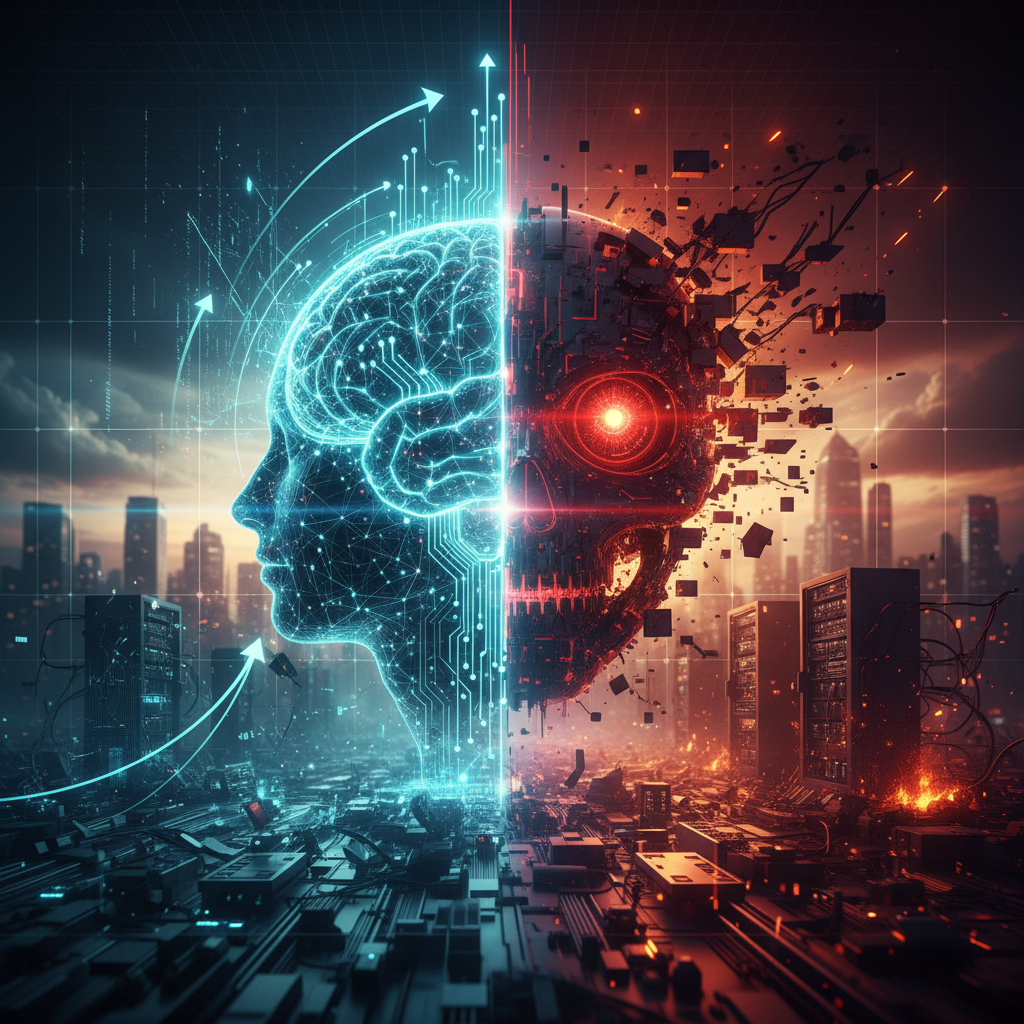
Artificial intelligence (AI) is no longer a concept confined to science fiction; it is a palpable force reshaping industries, economies, and daily lives at an unprecedented pace. From sophisticated algorithms powering our social media feeds to generative models creating art and code, AI’s rapid evolution presents a duality: immense promise for human advancement alongside complex ethical dilemmas and profound societal challenges. Navigating this transformative era requires careful consideration, proactive governance, and a commitment to responsible innovation.
The Accelerating Leap Forward in AI Capabilities
Recent years have witnessed a Cambrian explosion in AI capabilities, largely driven by advancements in machine learning, particularly deep learning and large language models (LLMs). Platforms like OpenAI’s ChatGPT, Google’s Gemini, and generative AI tools for images and video such as DALL-E and Sora, have brought sophisticated AI directly into public consciousness. These systems demonstrate an astonishing ability to understand, generate, and manipulate human-like text, images, and even complex data, pushing the boundaries of what machines can achieve. Specialized AIs are now accelerating scientific discovery, from drug development and personalized medicine to advanced materials design, promising breakthroughs that were once unimaginable.
Transforming Industries and Economies
The impact of AI is reverberating across virtually every sector. In healthcare, AI assists in faster and more accurate diagnostics, predicts disease outbreaks, and personalizes treatment plans, potentially saving countless lives and reducing costs. The financial sector leverages AI for fraud detection, algorithmic trading, and personalized financial advice. Education is being revolutionized by AI tutors and adaptive learning platforms that cater to individual student needs. Even creative industries are seeing AI become a powerful co-creator, assisting artists, musicians, and writers in generating new ideas and augmenting their capabilities. This widespread integration promises significant boosts in productivity and efficiency, potentially ushering in a new era of economic growth.
The Economic Ripple Effect: Jobs and Inequality
While AI offers immense economic opportunities, it also raises significant concerns about the future of work. Automation, powered by AI, is poised to displace jobs involving routine or repetitive tasks, leading to fears of widespread unemployment. However, proponents argue that AI will also create entirely new industries and job categories, much like past technological revolutions. The challenge lies in managing this transition, ensuring robust reskilling and upskilling programs, and addressing potential increases in economic inequality if the benefits of AI are not broadly distributed. As Dr. Anya Sharma, a leading tech economist, often states, "AI is fundamentally an amplifier. It will amplify human capabilities, but also existing societal inequalities if we don’t proactively intervene."
Navigating the Ethical Frontiers and Societal Challenges
Beyond economic shifts, AI presents a complex web of ethical and societal challenges. Bias in AI systems, often stemming from biased training data, can perpetuate and amplify discrimination in areas like hiring, lending, and criminal justice. The proliferation of AI-generated deepfakes and misinformation poses a severe threat to trust, democracy, and public discourse. Privacy concerns are heightened by AI’s ability to analyze vast amounts of personal data, raising questions about surveillance and data security. Furthermore, the increasing autonomy of AI systems, particularly in critical applications like autonomous weapons or medical diagnoses, demands careful consideration of accountability and control. The long-term, more speculative concerns about superintelligence and existential risk also underscore the need for responsible development.
The Urgent Call for Governance and Regulation
The rapid advancement of AI has outpaced the development of comprehensive regulatory frameworks. Governments worldwide are grappling with how to govern AI effectively, balancing innovation with safety and ethical considerations. The European Union’s AI Act, the U.S. executive orders on AI safety, and China’s regulations on generative AI represent initial steps, but a globally coordinated approach remains elusive. Key areas for regulation include transparency in AI decision-making, accountability for AI errors or harms, robust data privacy protections, and clear safety standards for high-risk AI applications. A multi-stakeholder approach involving governments, industry, academia, and civil society is crucial to developing policies that are both effective and adaptable to future technological shifts.
Conclusion: A Future Guided by Human Values
The AI revolution is a defining moment for humanity, offering the potential to solve some of our most pressing global challenges, from climate change and disease to poverty. However, realizing this potential while mitigating the inherent risks demands a collective commitment to developing and deploying AI responsibly. This means fostering innovation that is guided by human values, investing in education and reskilling, and establishing robust, adaptable governance frameworks. The choices we make today regarding AI’s development and integration will shape not only our technological landscape but also the very fabric of our societies for generations to come. The future of AI is not predetermined; it is a future we must actively and thoughtfully create.
📱 Stay Updated! Follow us for the latest breaking news and exclusive stories.